
Pufferbelly Park and the adjoining Ashland Skatepark form a central outdoor hub for residents of Ashland, Virginia, combining play spaces, skate features, and green areas within a compact neighborhood setting. For nearby homeowners and property owners, the park’s design, exposure, and maintenance needs also illustrate how Ashland’s climate and regional conditions affect outdoor structures, pavements, and adjacent home exteriors over time.
Location, History, and Layout
Pufferbelly Park sits just off Randolph Street, behind the Ashland Police Department, in the heart of town. The site functions as a small “village green,” with a modern playground, picnic tables, and a community garden woven into a single neighborhood block.
The park emerged in the early 2000s as a community gathering space, with a skatepark added around 2004 and additional play features installed in 2019 to broaden its appeal to families. These updates reflect a trend in small Virginia towns toward multi‑use parks that serve children, teens, and adults in the same footprint.
Pufferbelly Park includes two playground areas designed for different age groups, open lawn for informal play, and shaded picnic spots that act as spillover social space for adjacent residential streets. A Little Free Library and a free pantry add a civic dimension, reinforcing the park’s role as a shared neighborhood asset rather than a purely recreational site.
For a concise overview of features and location, residents can review the town’s own description of Kiwanis Pufferbelly Park.
Features of Pufferbelly Park
The playground in Pufferbelly Park uses a mix of climbing structures, slides, and swings arranged to accommodate a wide range of ages and abilities. Because these structures introduce fall heights and moving components, surface materials and impact zones remain important considerations for safety and long‑term durability.
National guidelines from the U.S. Consumer Product Safety Commission emphasize the use of soft, impact‑absorbing surfacing—such as engineered wood fiber or rubber—under and around playground equipment to reduce injury severity from falls. Readers can examine these recommendations in more detail in the CPSC’s public playground safety handbook. These recommendations also call for clear “fall zones” free of obstacles and hard surfaces like concrete or asphalt directly beneath elevated equipment.
In addition to play equipment, the park provides paved walkways, a parking lot, and picnic areas that need regular upkeep to manage wear, drainage, and vegetation growth. For adjacent property owners, these public hardscapes offer a useful comparison for how concrete, asphalt, fencing, and nearby building siding respond to foot traffic, sun exposure, and stormwater over time in Ashland’s climate.

Ashland Skatepark: Design and Use
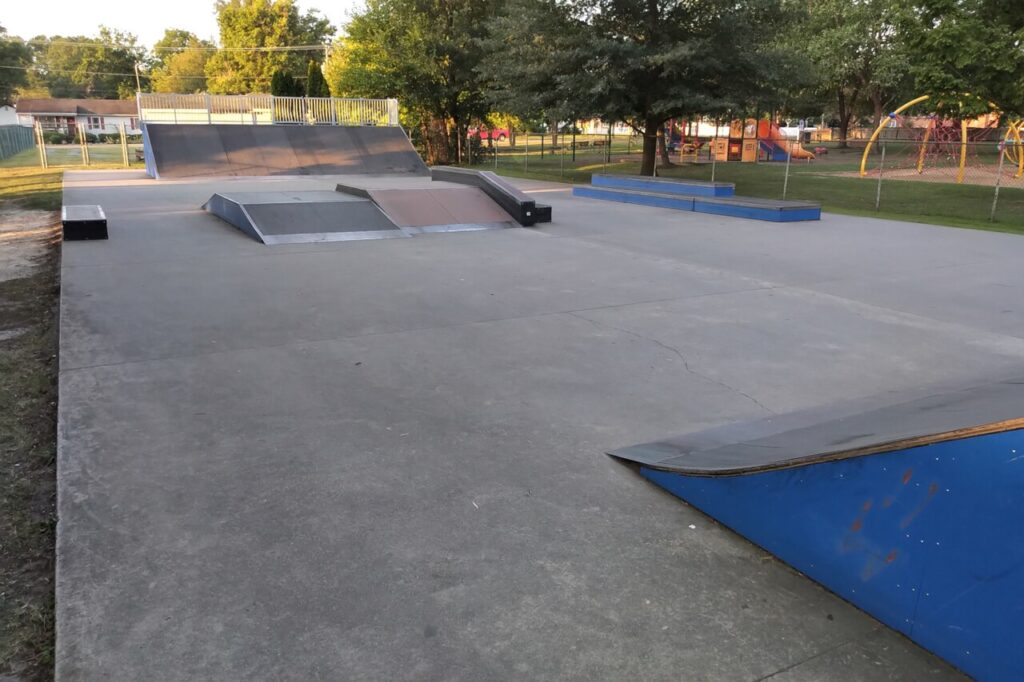
Ashland Skatepark occupies one edge of Pufferbelly Park, forming a dedicated space for skateboarding, scooters, and inline skating. Riders find a compact set of concrete features, including a slanted ramp, a quarter pipe, a step‑up ramp, fun box, kink rail, and small ledges that support both beginner and intermediate skills.
Because skateparks concentrate rolling loads, impacts, and grinding forces on a limited surface, design focuses on smooth transitions, durable concrete, and well‑anchored metal coping. Consistent maintenance, such as sealing joints, repairing cracks, and addressing ponding water, helps preserve ride quality and prevent more extensive structural damage.
For nearby homeowners, the skatepark illustrates how exposed concrete surfaces behave under continuous use and changing temperatures in central Virginia. Observing how the park manages water runoff, expansion joints, and edge details can inform decisions about driveways, patios, and foundation interfaces around local homes.
Climate, Weather, and Material Performance
Ashland experiences a humid subtropical climate, which means warm summers, cool winters, and significant year‑round precipitation. Climate data show average annual high temperatures near 68 degrees Fahrenheit, lows around 47 degrees, and roughly 44–45 inches of rainfall spread over more than 100 days each year. Local residents can review detailed normals through publicly available Ashland climate data.
This combination of heat, humidity, and frequent rain accelerates wear on exterior materials, whether on playground equipment, skatepark concrete, or residential siding. Moisture infiltration, ultraviolet exposure, and freeze‑thaw cycles can contribute to cracking, peeling finishes, and biological growth such as mildew on shaded surfaces.
Guidance from the U.S. Department of Energy’s Building America program recommends selecting exterior siding materials rated for moisture, impact, and pest resistance in regions with substantial precipitation and humidity. These resources also stress the importance of continuous weather‑resistant barriers behind siding and corrosion‑resistant fasteners to limit wind‑driven rain damage and long‑term deterioration.
In the Mid‑Atlantic, vinyl siding and fiber cement siding are both common choices because they resist rot, do not absorb water easily, and tolerate fluctuating temperatures. For homeowners near Pufferbelly Park, similar material choices can help exterior walls withstand repeated wetting from storms, wind‑blown debris, and reflected heat from paved surfaces.
A typical siding assembly in this region layers structural sheathing, a weather‑resistive barrier, flashing at openings, and cladding such as lap siding to manage bulk water and allow walls to dry. When this system works together with effective grading and roof drainage, it can significantly reduce the risk of moisture problems in Ashland homes that experience heavy seasonal rain.

Local Codes, Wind, and Neighborhood Homes
Residential construction in Ashland follows the Virginia Construction Code, which references national standards for structural design and wind loads such as ASCE 7. For the Richmond metro area and nearby localities, typical design wind speeds fall around 110 miles per hour, reflecting the need to handle strong thunderstorm gusts and occasional tropical storm remnants.
These wind considerations affect not only roof framing and fasteners but also exterior cladding systems such as lap siding, trim boards, and soffits. Best practices include using siding products tested for the wind pressures expected in central Virginia and following manufacturer nailing schedules that account for local design speeds.
Public spaces like Pufferbelly Park demonstrate how fences, shelters, and small structures respond to these regional wind conditions in an open setting. When homeowners observe warping panels, loose trim, or impact marks after storms near the park, similar patterns may appear on nearby dwellings, indicating where fastening, flashing, or material selection could be improved.
Why the Park Matters for Local Properties
For Ashland homeowners, Pufferbelly Park offers more than recreation; it provides a visible case study of how outdoor features age in the local environment. The condition of the playground equipment, skatepark concrete, shade structures, and perimeter fencing can give clues about which materials stand up best to local humidity, rainfall, and sun exposure.
Property owners can compare staining, fading, and surface wear on park elements with similar features around their homes, such as decks, siding, and walkways. Observing how the park channels water away from play surfaces, hardscapes, and landscaped areas may also inspire drainage strategies—like grading, swales, or downspout extensions—that reduce moisture stress on building exteriors in the surrounding neighborhood.
A hypothetical home one block from the park, for example, might show the same pattern of mildew streaks on north‑facing siding that appears on shaded park fencing after a wet summer. Recognizing that shared pattern can prompt more targeted cleaning, inspection for trapped moisture, and consideration of more durable finishes or cladding in future upgrades.
By understanding the interplay between Ashland’s climate, regional building standards, and the materials used in Pufferbelly Park and Ashland Skatepark, residents gain practical insight into long‑term durability for their own properties. This perspective can help inform choices about siding type, fastening methods, and maintenance routines that better match the specific conditions of Ashland, Virginia.