
The Ashland Historic District stands as a compelling example of late 19th and early 20th-century railroad suburb development in Virginia. Listed on the National Register of Historic Places in 1983, this 159-acre district showcases an exceptional collection of Victorian-era residential architecture and a compact commercial core, all centered around the Richmond, Fredericksburg, and Potomac Railroad tracks that shaped the town’s identity.
The district reflects Ashland’s growth from its establishment in 1836 through the post-World War II building boom, with a period of significance extending to 1966.
Architectural Character and Styles
The heart of the Ashland Historic District features a remarkable diversity of architectural styles that chronicle American residential design trends from 1875 to 1920. Center Street, running parallel to the railroad tracks, displays the district’s finest collection of ornamental, free-standing frame dwellings representing Victorian styles including Italianate, Eastlake, Queen Anne, Second Empire, and Colonial Revival. These large two to two-and-a-half story homes exemplify the quality and craftsmanship of turn-of-the-century construction.
Queen Anne architecture particularly defines Ashland’s streetscape, characterized by varied roof lines, decorative chimneys, wraparound porches, and bay windows. Notable examples include exceptional Queen Anne houses at 904 South Center Street and other locations throughout the district.
The Colonial Revival style also appears prominently, with many homes built between 1900 and 1920 featuring classical elements and symmetrical facades. Some properties demonstrate architectural evolution, such as the Italianate structure at 712 South Center Street that received a Colonial Revival porch during the early 20th century.
Significant Buildings and Landmarks
The district encompasses several architecturally significant structures that anchor Ashland’s historic character. The Randolph-Macon College quadrangle contributes important Victorian collegiate architecture, with Washington and Franklin Hall serving as the oldest building.
Completed in 1872 and designed by B.F. Price of Alexandria, this Italianate structure underwent extensive restoration in the 1980s after years of deterioration. Adjacent buildings include Pace Lecture Hall, another Italianate design from 1876, and the Gothic Revival Duncan Memorial Chapel, now the Old Chapel Theater, designed by Richmond architect William West in 1879.
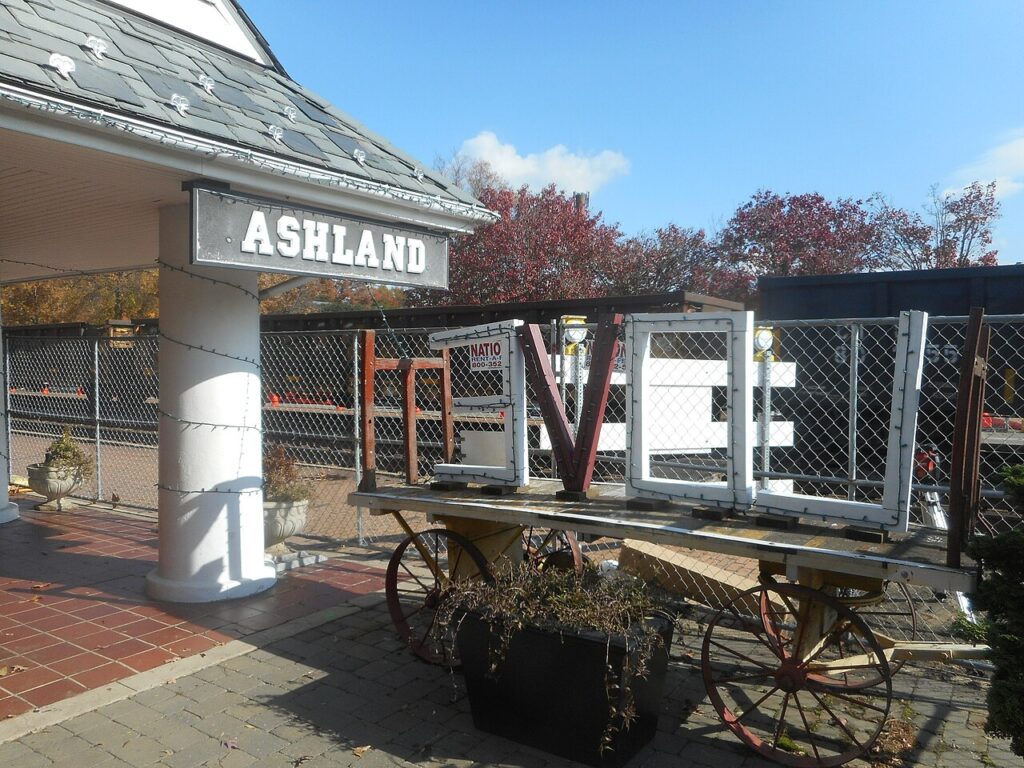
The Ashland depot, built in 1922 by W. Duncan Lee, represents sophisticated Colonial Revival railroad architecture despite its modest size. This structure currently houses the Visitors Center and exemplifies the Spanish Revival style listed on the National Register.
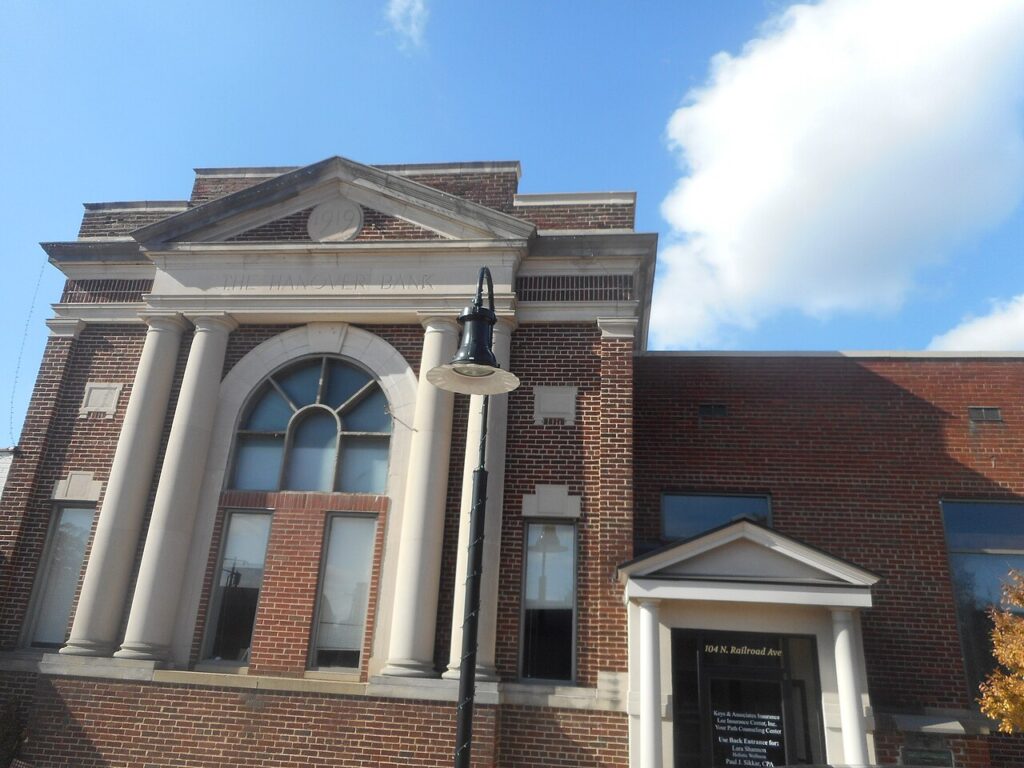
Nearby, the former Hanover Bank Building from 1919 features four engaged Doric columns designed by Albert F. Huntt. The Ashland Theater, constructed around 1950, displays a striking Art Deco tower and was restored to its original glory in 2018 with modern amenities while preserving its 1940s charm.
The Macmurdo House remains one of the best examples of Greek Revival architecture in Ashland. Built in 1858 for C.W. Macmurdo, treasurer of the Richmond, Fredericksburg and Potomac Railroad Company, this two-story, three-bay frame house represents one of the least altered mid-19th-century dwellings in Hanover County.
The original structure, along with its late-19th-century rear addition and 1920s garage, documents several generations of family occupancy through the Civil War, Reconstruction, and early 20th-century modernization.
Preservation Efforts and District Expansion
Ashland has demonstrated strong community commitment to historic preservation through multiple initiatives. In 2019, the Town of Ashland completed a comprehensive update to the historic district nomination, expanding the period of significance and adding 111 new contributing resources constructed between 1934 and 1964.
This $20,000 project, funded through the Department of Historic Resources’ Cost Share Grant program and executed in coordination with Commonwealth Heritage Group, Inc., extended recognition to post-World War II development and corrected errors in the original 1983 nomination. The district expansion provides increased access to federal and state historic rehabilitation tax credits, which offer substantial incentives for property owners undertaking preservation projects.
Virginia’s Department of Historic Resources administers both programs, with state tax credits available for owner-occupied and income-producing buildings. The federal program requires “substantial rehabilitation” exceeding the owner’s adjusted basis or $5,000, while state program thresholds differ. These financial incentives have spurred investment in historic properties, including the successful restoration of the endangered Ashland Theater.
Preservation Benefits and Community Impact
The expansion of Ashland’s historic district delivers multiple advantages beyond financial incentives. The updated documentation improves accounting of the town’s post-WWII development, civil rights era, and massive resistance period history, providing more comprehensive historical context.
Importantly, the designation does not impose additional regulations on property owners regarding exterior modifications or establish an architectural review board, addressing common concerns about historic district restrictions.
A geographic information system database maintained by Hanover County contains nearly 1,000 surveyed properties, facilitating preservation planning and land-use decisions. The county has created eight Overlay Historic Preservation Districts and works closely with private developers to integrate preservation into approval processes. This systematic approach has enabled protection of significant resources, including 18th-century homes and Civil War earthworks, while accommodating appropriate development.
The Ashland Museum, established during the town’s 150th anniversary celebration, serves as an educational hub for preservation advocacy. Located at 105 Hanover Avenue with exhibits in the Red Caboose, the museum showcases artifacts and historical information that connect residents and visitors to Ashland’s architectural heritage.
Community education sessions about historic tax credit advantages encourage property owners to undertake historically sensitive repairs that strengthen structures while preserving integrity.
Conclusion
The Ashland Historic District exemplifies successful small-town preservation, balancing protection of irreplaceable architectural resources with practical incentives for rehabilitation investment. The district’s Victorian residential architecture, significant institutional buildings, and compact commercial core create a cohesive historic environment that defines Ashland’s character.
Through strategic expansion, accessible tax credit programs, and strong community engagement, Ashland continues preserving its railroad suburb heritage for future generations while maintaining the vibrant, tree-studded streetscapes that make the town distinctive.